Month: November 2020

Calcio Storico Fiorentino 2010

Comune di Firenze Logo
Comune di Firenze Logo [Reference: 1]

Result

DateHome TeamAway Team
Final
24.06.2010Azzurri di Santa Croce11½Bianchi di Santo Spirito3
Calcio Storico Fiorentino 2010 [Reference: 2]

Report

Azzurri di Santa Croce won the 2010 Calcio Fioerntino Trofeo with a 11½ to 3 win over Bianchi di Santo Spirito in the Final. No Semi-Finals were played in 2010.

About

Calcio Storico Fiorentino has been played in Florence, Tuscany since the Renaissance. The first organised match took place on February 17, 1530. It was revived in the 20th Century. first under the 1930s government of Mussolini, and then again after World War II in the Italian Republic. Earlier matches dating back to the 1400s mention games played in breaks between work by workers [Reference: 2-5]

The matches usually take place during the June Festival period, with four teams, Azzurri, Bianchi, Rossi and Verdi (Blues, Whites, Reds and Greens) representing the four quarters of the city of Florence. The match is played between 54 players – two teams of 27 – with teams reversing ends after each score. It is played on sand in the Plaza. There are usually a Semi-Finals and Final. Half Points are scored, and teams play in traditional dress.

[6] Florence Italy, February 9th, 2019: football Serie A match between Fiorentina vs Napoli at Artemio Franchi Stadium. In the pic: Florentine historical football By Gennaro Di Rosa / www.shutterstock.com

References

Images

[1] Calcio Storico Fiorentino Sito Ufficiale (2020) logo-tamburino-firenze [Internet] Available from: http://www.calciostoricofiorentino.it/sites/default/files/logo-tamburino-firenze.png [Accessed 4 August 2020]

Websites

[2] Calcio Storico Fiorentino Sito Ufficiale (2020) Risultati Partite [Internet] Available from: http://www.calciostoricofiorentino.it/risultati_partite [Accessed 4 August 2020]

[4] Calcio Storico Fiorentino Sito Ufficiale (2020) CALCIO STORICO FIORENTINO [Internet] Available from: http://calciostoricofiorentino.it/?q=calcio-storico-fiorentino [Accessed 4 August 2020]

[5] Calcio Storico Fiorentino Sito Ufficiale (2020) Studies & Documentation [Internet] Available from: http://www.calciostoricofiorentino.it/?q=studi_e_documentazione [Accessed 4 August 2020]

Images

[6] Florence Italy, February 9th, 2019: football Serie A match between Fiorentina vs Napoli at Artemio Franchi Stadium. In the pic: Florentine historical football By Gennaro Di Rosa / www.shutterstock.com

Acknowledgements

Thanks to Francesco.

About this document

Researched, compiled and written by Enda Mulcahy for the

Eirball | GAA World Archive

Last Updated: 26 November 2020

(c) Copyright Enda Mulcahy and Eirball 2019-2020

You may quote this document in part provided that proper acknowledgement is given to the authors. All Rights Reserved.
Georgian Lelo Federation Samegrelo Region Championship 2016

Georgian Lelo Federation Logo
Georgian Lelo Federation Logo [Reference: 1]

Results

DateWinnersRunners-Up
Semi-Finals
13.08.2016Poti6Senaki2
13.08.2016Khobi6Zugdidi5 aet
3rd Place
13.08.2016Zugdudi6Senaki3
Final
13.08.2016Poti7Khobi3
Georgian Lelo Federation Samegrelo Region Championship 2016 [Reference: 2-3]

Report

Poti won the first Lelo Championship of the Samegrelo Region of Georgia in 2016, triumphing 7-3 in the Final against Khobi. The Championship was the first in the region and featured 8 teams, with the tournament played in a straight knockout format.

The Poti Lelo team receiving their Trophy and Medals
The Poti Lelo team receiving their Trophy and Medals [Reference: 4]

About Lelo Burti

Lelo, also known as Lelo Burti, is the traditional ball game of Georgia, a small republic in the Caucusus Mountains between Europe and Asia near Turkey and Russia that is newly independent. Lelo is possibly why Rugby Union is so popular in Georgia, and is their Native Sport, currently undergoing a revival. [Reference: 2-3]

References

Images

[1] Lelo Burti (2016) Logo_ [Internet] Available from: https://web.archive.org/web/20160923010826im_/http://lelo.comyr.com/images/Logo_.jpg [Accessed 24 August 2020]

Internet Archives

[2] Lelo Burti (2014)Index [Internet] Available from: https://web.archive.org/web/20160914183050/http://lelo.comyr.com/index.htm [Accessed 24 August 2020]

Online Reference Websites

[3] Google Translate (2020) [Internet] Available from: https://www.google.com/search?q=google+translate&rlz=1C1CHBF_enIE835IE835&oq=google+translate&aqs=chrome.0.69i59l2j0l5j69i64.5275j0j4&sourceid=chrome&ie=UTF-8 [Accessed 24 August 2020]

Images

[4] Lelo Burti (2014) 2016_XOBI_03 [Internet] Available from: https://web.archive.org/web/20160923011034im_/http://lelo.comyr.com/images/2016_XOBI_03.jpg  [Accessed 24 August 2020]

Acknowledgements

Thanks to Clive Saab.

About this document

Researched, compiled and written by Enda Mulcahy for the

Eirball | GAA World Archive

Last Updated: 22 November 2020

(c) Copyright Enda Mulcahy and Eirball 2019-2020

You may quote this document in part provided that proper acknowledgement is given to the authors. All Rights Reserved.

Kirkwall Ba’ Game (Orkney Uppies and Doonies)

About

The Orkney Ba’ game is played on Christmas Day and New Years’ Day each year in Kirkwall, Orkney Islands, in the North sea off Scotland. It is a Medieval Football game played with a Ba’ (Ball made of cork and covered with leather). two opposing sides, the Uppies and Doonies (those born to the North of the Cathedral are Doonies and those born to the South of the Cathedral are Uppies).

The Uppie goal is to touch the Ba’ against a wall in the South end of the town. The Doonies have to get the ball into the water of Krkwall Bay to the North of the town. There are no official rules or limit to the number of players on each side although “inappropriate behaviour” is kept in check.

Usually a tight scrum develops around the Ba’ but when the scrum breaks chaos erupts as the team with possession tries to get to their goal as fast as they can. A game can last up to five hours, although there is only one goal scored and the game is up.

Orkney Ba’ Game in Progress
Orkney Ba’ Game in Progress [Reference: 2]

Winners

YearWinnersWinning Player
2017UppiesGregor Dowell
Orkney Ba’ Game Winners [Reference: 3

Reference

Websites

[1] Orkneyjar / Sigurd Towrie (2018) The Kirkwall Ba’ [Internet] Available from: http://www.orkneyjar.com/tradition/bagame [Accessed 25 October 2018]

Images

[2] Orkneyjar (2018) ba1 [Internet] Available from: http://www.orkneyjar.com/tradition/bagame/ba1.jpg [Accessed 25 October 2018]

Media

[3] You Tube (2019) Kirkwall Boys Ba Christmas Day 2017 (part 3 of 3) . Uploaded by tomf001 [Internet] Available from: https://www.youtube.com/watch?v=rjx9mt-OTGE [Accessed 8 September 2020]

Acknowledgements:

Thanks to Richard Mulcahy and Derek Walsh.

About this document

Researched, Compiled and Written by Enda Mulcahy for the

Eirball | GAA World Archive

Last Updated: 18 November 2020

(c) Copyright Enda Mulcahy and Eirball 2020

You may quote this document in part provided that proper acknowledgement is given to the authors. All Rights Reserved.
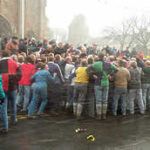
Ashbourne Shrovetide Football 217 AD-Present

Report

According to historical sources, Roman Legions played their British counterparts in a game of Football on Shrove Tuesday in Derby in 217 AD, with the Britons winning. It is hard to believe that Ancient Britons, still Celtic, and before the arrival of both Ango-Saxon tribes in England, and also before the arrival of Christianity played a game on a day associated with Lent in the Christian calendar.

Maybe the game was played and later Christian legend ascribed it to Shrove Tuesday, or it was warfare which the Britons won, and was thus later made out to be a Football game by Christian scribes. Nevertheless, whether it was warfare or Football the Celtic Britons won that day.

It is interesting to note the game was played in Derby, given that this is the name given to local rivalries in English and Scottish Soccer (e.g. Liverpool v Everton, Manchester United v Manchester City), and that a game known as Shrovetide Football is still played in Derbyshire to this day, in Ashbourne, with no rules and the same Medieval mob aspect to the game as the other Medieval British Football games.

Results

DateWinnersRunners-Up
217 ADBrittaniaRoman Empire
Derbyshire Shrovetide Football [References: 1-2]

References

Bibliography

[1] Professional Football Researchers Association (2011) “A Freendly Kinde of Fight: The Origins of Football to 1633 The Early History of Professional Football. pg. 6-7. PFRA Publications. Connecticut.

Websites

[2] BBC (2020) The Strange Game of Shrovetide Football [Internet] Availble from: http://www.bbc.com.news/uk-england-derbyshire-35506927/the=strange-game-of-shrovetide-football [Accessed 9 September 2020]

Acknowledgements

Thanks to Richard Mulcahy and Derek Walsh.

About this document

Researched, compiled and written by Enda Mulcahy for the

Eirball | GAA World Archive

Last Updated: 13 November 2020

(c) Copyright Enda Mulcahy and Eirball 2020

You are free to copy this document in whole or part provided that proper acknowledgement is given to the authors. All Rights Reserved.

Welsh Baseball Union Premier Division 2012-2014

WBU Premier Division 2012

PWDLPts
St. Peter’s RFC10100020
Rumney RFC1090118
Grange Catholics1051411
Grange Albion1042410
St. Michael’s104159
Llanrumney101092
Welsh Baseball Union Premier Division 2012 {Reference: 1

WBU Premier Division 2013

PWDLPts
Grange Albion870114
Grange Catholics860212
St. Alban’s RFC960312
St. Peter’s RFC950410
Welsh Baseball Union Premier Division 2013 [Reference: 2]

WLBU Premier Division 2014

PWDLPts
St. Alban’s880016
Grange Albion760112
Grange Catholics850310
Rumney RFC84048
Welsh Baseball Union Premier Division 2014 [Reference: 3

Report

The Welsh Baseball Union governs the Men’s game in Wales, currently only running leagues at underage level. St. Peter’s (2012), Grange Albion (2013) and St. Alban’s (2014) won the last three titles in the Men’s League before it was abandoned.

About Welsh Baseball

Welsh Baseball is the Welsh version of Rounders or Baseball and is their Traditional Celtic Sport. It is played like Baseball or Rounders on a diamond, with the original posts instead of bases like in Medieval Rounders, and the diamond is assymetrical. The bat is more like a cricket bat than a baseball or rounders bat, being slightly flat and tapers from the base to the handle. Points are scored for each base reached and also a point for getting all the way round back home.

The sport is played in mostly working class areas of South Wales and Liverpool, particularly in neighborhoods with a strong Irish Catholic population.

The game was originally Rounders but a visiting American Baseball team led by the legendary A.G. Spalding, played matches in Liverpool against local teams at the turn of the 20th Century (early 1900s), and the English Rounders Association (Liverpool) adopted some of the innovations in Baseball, thus deciding it was no longer Rounders and changed the name. It instructed its counterparts in the Welsh Baseball Union and Gloucester Baseball Union (no longer active) to do the same, thus leading to a hybrid Rounders-Baseball code unique to Wales and Liverpool.

References

Websites

[1] Wayback Machine Internet Archive – Welsh Baseball Union (2013) Premier Division [Internet] Available from: https://web.archive.org/web/20130122204111/http://www.welshbaseball.co.uk/ [Accessed 11 April 2017]

[2] Wayback Machine Internet Archive – Welsh Baseball Union (2013) Premier Division [Internet] Available from: https://web.archive.org/web/20130908075104/http://www.welshbaseball.co.uk/ [Accessed 11 April 2017]

[3] Wayback Machine Internet Archive – Welsh Baseball Union (2014) Premier Division [Internet] Available from: https://web.archive.org/web/20141016050038/http://www.welshbaseball.co.uk/ [Accessed 11 April 2017]

Acknowledgements

Thanks to Hugh Mulcahy.

About this document

Researched, Compiled and Written by Enda Mulcahy for the

Eirball | GAA World Archive

Last Updated: 13 November 2020

(c) Copyright Enda Mulcahy and Eirball 2019-2020

You may quote this document in part provided that proper acknowledgement is given to the authors. All Rights Resereved.

Pesapallo on Independence Day at the Finnish Embassy in Ireland 6 December

Pesapallo World Cup 2019 Logo
Pesapallo World Cup 2019 Logo [Reference: 1]

About

Pesapallo is the Finnish version of Baseball and is their National Sport. It has an unusual form of pitching and players run zig-zags through bases. There is a game played on their National Holiday every year at the Finnish Embassy in Ireland.

Here is a Video of the sport from the New York Times, as shared by the Irish-Finnish Society on Facebook https://www.facebook.com/IrishFinnishSociety/posts/1326676680678956 [Accessed 27 June 2019]

References

Logos

[1] Sponsor my Event (2020) LOGO World-Cup-Pesäpallo-Pune-2019 – Copy [Internet] Available from: https://cdn.filepicker.io/api/file/YAItHNJTLKnALYELy7Qu [Accessed 13 November 2020]

Social Media

[2] Irish-Finnish Society Facebook (2019) Video [Internet] Available from:  https://www.facebook.com/IrishFinnishSociety/posts/1326676680678956 [Accessed 27 June 2019]

Acknowledgements

Thanks to Howard.

About this document

Researched, compiled and written by Enda Mulcahy for the

Eirball | Irish North American and World Sports Archive

Last Updated: 13 November 2020

(c) Copyright Enda Mulcahy and Eirball 2019-2020

You may quote this document in part provided that proper acknowledgement is given to the authors. All Rights Reserved.

Calcio Storico Fiorentino Finals 1952-Present

Comune di Firenze Logo
Comune di Firenze Logo [Reference: 1]

Finals 1952-Present

YearWinnersRunners-up
1952Rossi3Verdi½
1953RossiBianchi2
1954BianchiAzzurri½
1955Azzurri6Verdi
1956Bianchi6Azzurri
1957No Winner
1958Bianchi7Azzurri1
1959No winner
1960Bianchi6Azzurri1
1961Azzurri1Bianchi½
1962No winner
1963Rossi1Verdi½
1964Bianchi2Rossi
1965Rossi1Verdi½
1966BianchiAzzurri½
1967No winner
1968VerdiVerdi1
1969BianchiAzzurri½
1970Bianchi4Azzurri½
1971Bianchi5Rossi0
1972Bianchi1Azzurri0
1973Bianchi4Rossi1
1974BianchiRossi0
1975Bianchi5Azzurri½
1976Bianchi1Azzurri0
1977 *Bianchi½Azzurri½
1978 +BianchiAzzurri
1979Azzurri11Rossi1
1980AzzurriBianchi1
1981BianchiAzzurri
1982No winner
1983AzzurriBianchi
1984Azzurri4Verdi3
1985AzzurriBianchi3
1986Azzurri3Bianchi1
1987Azzurri4Rossi½
1988Azzurri5Bianchi3
1989AzzurriVerdi1
1990No winner
1991AzzurriVerdi
1992AzzurriRoss1
1993AzzurriVerdi
1994AzzurriVerdi½
1995Azzurri3Verdi
1996Verdi5Rossi1
1997No winner
1998Rossi11½Verdi4
1999Azzurri9Verdi0
2000Azzurri7Rossi3
2001BianchiNo opposition
2002Azzurri6Rossi3
2003Azzurri9Verdi
2004Rossi9Bianchi
2005Azzurri3Verdi0
2006No winner
2007Bianchi9Viola7
2008RossiAzzurri4
2009Rossi14Azzurri
2010Azzurri11½Bianchi3
2011AzzurriAzzurri
2012Bianchi4Azzurri0
2013Azzurri2Bianchi0
2014No winner
2015BianchiVerdi½
2016BianchiAzzurri6
2017Bianchi6Rossi
2018Rossi
2019Rossi
Finals 1952-Present [Reference: 2-3]

Report

Bianchi di Santo Spirito were the Champions most often from the 1950s to the 1970s, including a 10 year reign from 1969 to 1978. Azzurri di Santa Croce took over the mantle from 1979 to 1995 winning almost all the Finals during that period. From then on the winners roll has been more mixed, with Bianchi and Azzurri getting on the winners roll frequently, as well as Rossi di Santa Maria Novella on five occasions.

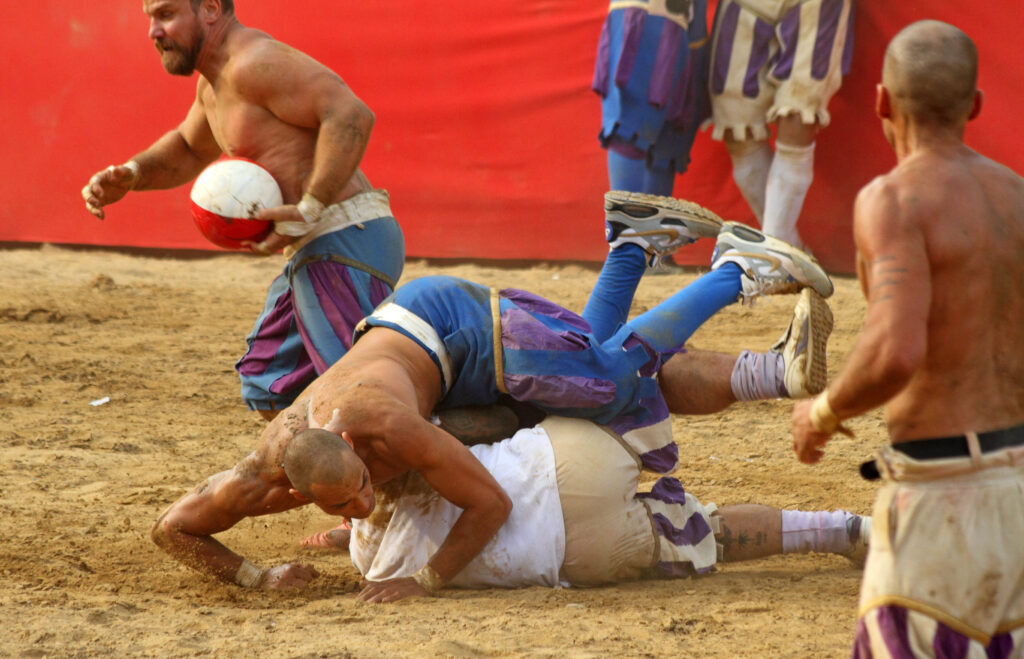
FLORENCE – JUN 24: Fighting players during Calcio Fiorentino match on June, 24,2012. Calcio fiorentino (calcio storico or calcio in costume) is an historic florentine game, origins of modern football [Reference: 9]

Teams

TeamTranslation
Azzurri di Santa CroceBlues
Bianchi di Santo SpiritoWhites
Rossi di Santa Maria NovellaReds
Verdi di San GiovanniGreens
Teams 1952-Present [Reference: 2-3]
[7] FLORENCE, ITALY – FEBRUARY 17, 2020: Calcio Storico and the rallying of the troops By BAHADIR ARAL AVCI / www.shutterstock.com

About

Calcio Storico Fiorentino has been played in Florence, Tuscany since the Renaissance. The first organised match took place on February 17, 1530. It was revived in the 20th Century. first under the 1930s government of Mussolini, and then again after World War II in the Italian Republic. Earlier matches dating back to the 1400s mention games played in breaks between work by workers [Reference: 2-5]

The matches usually take place during the June Festival period, with four teams, Azzurri, Bianchi, Rossi and Verdi (Blues, Whites, Reds and Greens) representing the four quarters of the city of Florence. The match is played between 54 players – two teams of 27 – with teams reversing ends after each score. It is played on sand in the Plaza. There are usually a Semi-Finals and Final. Half Points are scored, and teams play in traditional dress.

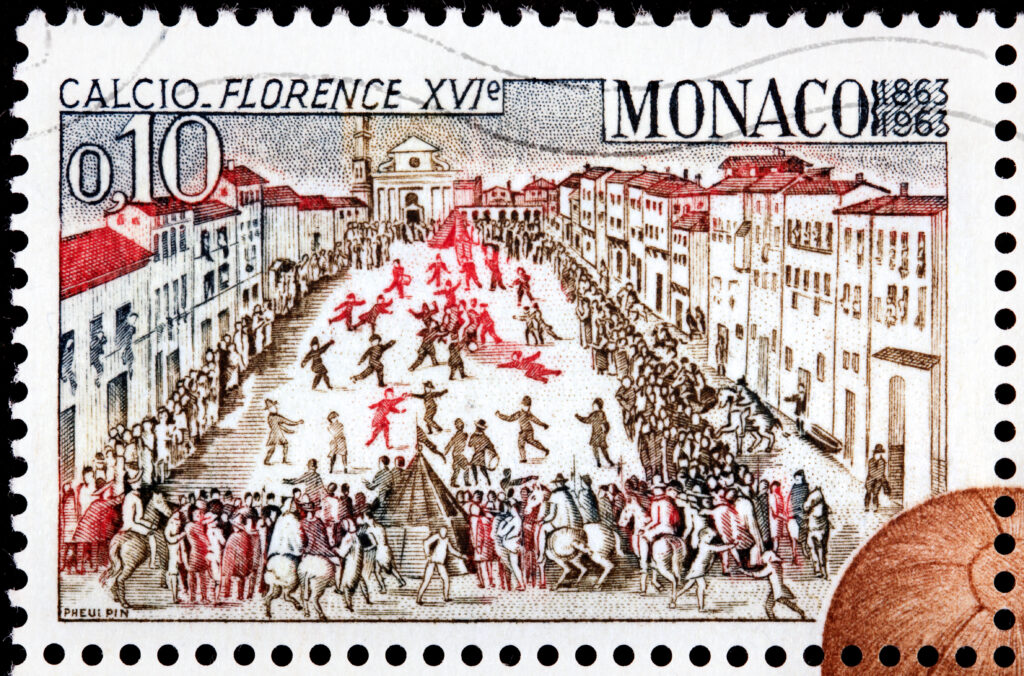
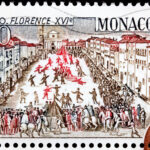
[8] MONACO – CIRCA 1963: A stamp printed by MONACO shows an illustration of the Calcio Fiorentino field and starting positions from a 1688 book by Pietro di Lorenzo Bini, Florence, circa 1963 [Reference: 7] By Sergey Goryachev / http://www.shutterstock.com

References

Images

[1] Calcio Storico Fiorentino Sito Ufficiale (2020) logo-tamburino-firenze [Internet] Available from: http://www.calciostoricofiorentino.it/sites/default/files/logo-tamburino-firenze.png [Accessed 4 August 2020]

Websites

[2] Calcio Storico Fiorentino Sito Ufficiale (2020) Risultati Partite [Internet] Available from: http://www.calciostoricofiorentino.it/risultati_partite [Accessed 4 August 2020]

[3] Calcio Storico Fiorentino Sito Ufficiale (2020) Albo d’Oro [Internet] Available from: http://www.calciostoricofiorentino.it/risultati_partite [Accessed 4 August 2020]

[4] Calcio Storico Fiorentino Sito Ufficiale (2020) CALCIO STORICO FIORENTINO [Internet] Available from: http://calciostoricofiorentino.it/?q=calcio-storico-fiorentino [Accessed 4 August 2020]

[5] Calcio Storico Fiorentino Sito Ufficiale (2020) Studies & Documentation [Internet] Available from: http://www.calciostoricofiorentino.it/?q=studi_e_documentazione [Accessed 4 August 2020]

Images

[6] Calcio Storico Fiorentino Sito Ufficiale (2020) IMG_0823 [Internet] Available from: http://calciostoricofiorentino.it/sites/default/files/IMG_0823.jpg [Accessed 4 August 2020]

[7] FLORENCE, ITALY – FEBRUARY 17, 2020: Calcio Storico and the rallying of the troops By BAHADIR ARAL AVCI / www.shutterstock.com

[8] MONACO – CIRCA 1963: A stamp printed by MONACO shows an illustration of the Calcio Fiorentino field and starting positions from a 1688 book by Pietro di Lorenzo Bini, Florence, circa 1963 By Sergey Goryachev / http://www.shutterstock.com

[9] FLORENCE – JUN 24 Fighting players during Calcio Fiorentino match on June, 24,2012 Calcio fiorentino calcio storico or calcio in costume is an historic florentine game, origins of modern football By mkistrynhttp://www.123rf.com

Acknowledgements

Thanks to Francesco.

About this document

Researched, compiled and written by Enda Mulcahy for the

Eirball | GAA World / Irish North American and World Sports Archive

Last Updated: 25 July 2021

(c) Copyright Enda Mulcahy and Eirball 2019-2021

You may quote this document in part provided that proper acknowledgement is given to the authors. All Rights Reserved. The Logos and Photos used in this article remain the property of the organisations and individuals which own the copyright and are used here for educational and information purposes only.
Manx Cammag North v South on St. Stephen’s Day 2015-Present

Results

YearWinnersRunners-Up
2015North7South1
Manx Cammag North v South on St. Stephen’s Day 2015-Present [Reference: 1-2]

About

Manx Cammag is a version of Hurling (or Caman in Irish) played in the Isle of Man, where Manx Gaelic was traditionally spoken. It is also very similar to the Scottish game of Shinty or Camanachd.

The earliest mention of Hurling or Caman is in the Irish ‘Book of Leinster’ in the 12th Century AD. It played with a small ball and hooked stick.

Kit Gawne, writing in his book, ‘Isle of Man Hockey’ suggests the game may have been introduced by missionaries, although the earliest mention in the Isle of Man records is not until 1760.

It is a Winter Sport, with special matches arranged on St. Stephen’s Day (such as the one between North & South of the Island.

There are few rules, and any number of players can play on either side, with coats or sticks marking goalposts.

The match on St. Stephen’s Day between North & South is played in conjunction with the Festivities associated with the day, such as ‘Hunting the Wren’, although these days no wren is killed, and those making donations to charity are given a coloured ribbon, rather than a wren’s feather, supposed to bring good luck for the following year, thought to be particularly efficacious in the event of a shipwreck or witchcraft.

Manx Cammag North v South on St. Stephen's Day 2015 in the Isle of Man
Manx Cammag North v South on St. Stephen’s Day 2015 in the Isle of Man [Reference: 3][Photo Credit: North American Manx Association]

Reference:

Websites:

[1] North American Manx Association (2015) “Rain doesn’t stop play on St. Stephen’s Day” [Internat] Available from: http://namanx.org/rain-doesnt-stop-play-on-st-stephens-day-2 [Accessed 5 March 2017]

[2] isleofman.com (2017) “Work off your Christmas Turkey with a game of Cammag!” [Internet] Available from: https://www.isleofman.com/lifestyle/health-sports/cammag/ [Accessed 13 October 2017]

Images

[1] North American Manx Association (2015) “DSCF2438” [Internat] Available from: http://4.bp.blogspot.com/-4Yay0i0iKzc/VoK2Kbk6aOI/AAAAAAAABiU/19fGAhbeWwM/s1600/DSCF2438%2B%25282%2529.JPG [Accessed 11 November 2020]

Acknowledgements:

Thanks to Stephen Fitzpatrick & John Doody

About this document

Researched, Compiled and Written by Enda Mulcahy for the

Eirball | GAA World Archive

Last Updated: 11 November 2020

(c) Copyright Enda Mulcahy and Eirball 2019-2020

You may quote this document in part provided that proper acknowledgement is given to the authors. All Rights Reserved.
Welsh Ladies Baseball Union Division 1 2012-2018

Welsh Ladies Baseball Union Logo
Welsh Ladies Baseball Union Logo [Reference: 1]

WLBU Division 1 2012

PWDLRFRAPts
Grange Catholics (P)14110322
Grange Albion12100220
Whitechurch Robins1060412
Rumney Ladies1150610
Canton Cross114078
Fairwater Social104068
Gower Sports124088
Peter Lea Ospreys1420124
Welsh Ladies Baseball Union Division 1 2012 [Reference: 2]

WLBU Division 1 2013

PWDLRFRAPts
Gower Sports (P)14130126
Grange Albion14120224
Canton Cross1490518
Whitechurch Robins1480616
Fairwater Ospreys144199
Fairwater Social144199
St. Peter’s B1430116
Rumney Ladies1420124
Welsh Ladies Baseball Union Division 1 2013 [Reference: 3]

WLBU Division 1 2014

PWDLRFRAPts

WLBU Division 1 2015

PWDLRFRAPts
Fairwater Ladies (C)12100220
Canton Cross1270514
Rumney Ladies1270514
Malpas Ladies1250710
Welsh Ladies Baseball Union Division 1 2015 [Reference: 4]

WLBU Division 1 2016

PWDLRFRAPts
Fairwater Ladies (P)962114
Rumney Ladies952212
Starlets1042410
Canton Cross93248
Eastern Ladies10010010
Malpas Ladies90272
Welsh Ladies Baseball Union Division 1 2016 [Reference: 5]

WLBU Division 1 2017

PWDLRFRAPts
Starlets (P)12120024
Railway Ladies12100220
Gower Sports B1260612
Llandaff North RFC1260612
St. Albans1250710
Splott Sluggers123096
St. Peter’s1200120
Welsh Ladies Baseball Union Division 1 2017 [Reference: 6]

WLBU Division 1 2018

PWDLPct
Railway Ladies (P)16140288
Caerau Nomads16110569
Malpas RFC15100567
St. Albans15100567
Llandaff North RFC1680850
Splott Sluggers1680850
Fairwater Social1570847
Gower Sports B1510147
St. Peter’s RFC1610156
Welsh Ladies Baseball Union Division 1 2018 [Reference: 7]

Report

The Welsh Ladies Baseball Union Division 1 was the second level of Welsh Baseball from 2012 to 2018, and the Division Champions gained automatic promotion to the Premier League. The Division 1 Champions fron 2012 to 2018 were Grange Catholics (2012), Gower Sports (2013), Fairwater Ladies (2015 and 2016), Stalets (2017) and Railway Ladies (2018).

About Welsh Baseball

Welsh Baseball is a version of Rounders played primarily in South Wales, and also in Liverpool, where it is known as English Baseball. It is like a cross between Baseball, Rounders and Cricket. During the latter half of the 19th Century, the famous A.G. Spalding of Major League Baseball fame organised a Baseball Tour of England and Ireland, and in the process played a number of games against English and Welsh Rounders teams, who adopted some of the rules (such as tagging a playerout with the ball and two-handed batting). It kept the poles rather than flat bases and left the diamond in an irregular shape with all four sides unequal in length. Welsh Baseball also has a bat more like a Cricket Bat than a Baseball Bat, and it tapers towards the handle. According to sources in referenced in the articles below, Irish immigrants to Liverpool and South Wales were numerous among the Working Classes playing the game in the 20th Century. It is still played in South Wales and Liverpool but is now mostly a Children’s and Teenagers Game.

References

Logos

[1] Welsh Ladies Baseball Union Facebook Page (2017) Profile Picture April 12 2017 [Internet] Available from: https://www.facebook.com/21387949710/photos/a.10154678147744711.1073741828.21387949710/10155257824239711/?type=3&theater [Accessed 30 November 2017]

Internet Archive

[2] Internet Archive – Welsh Ladies Baseball Union (2014) 2012 League Tables [Internet] Available from: http://web.archive.org/web/20120722134948/http://www.wlbu.co.uk/cms2/index.php?option=com_content&view=article&id=26&Itemid=12 [Accessed 11 August 2017]

Websites

[3] Welsh Ladies Baseball Union (2013) 2013 League Tables [Internet] Available from: http://www.wlbu.co.uk/cms2/index.php?option=com_content&view=article&id=26&Itemid=13 [Accessed 17 December 2016]

[4] Welsh Ladies Baseball Union (2015) 2015 League Tables [Internet] Available from; http://www.wlbu.org/2015-league-tables/ [Accessed 11 August 2017]

[5] Welsh Ladies Baseball Union (2016) 2016 League Tables [Internet] Available from; http://www.wlbu.org/2016-league-tables/ [Accessed 11 August 2017]

[6] Welsh Ladies Baseball Union (2017) 2017 League Tables [Internet] Available from; http://www.wlbu.org/2017-league-tables/ [Accessed 11 August 2017]

[7] Welsh Ladies Baseball Union (2018) 2017 League Tables [Internet] Available from; http://www.wlbu.org/2017-league-tables-2/ [Accessed 16 September 2018

Acknowledgements

Thanks to Kate Hartnett, Cardiff University.

About this document

Researched, Compiled and Written by Enda Mulcahy for the

Eirball | GAA World Archive

Last Updated: 11 November 2020

(c) Copyright Enda Mulcahy and Eirball 2019-2020

You may quote this document in part provided that proper acknowledgement is given to the authors. All Rights Reserved.
Cornish Hurling Town v Country Shrove Tuesday at St Columb 1950-2005

Winners 1950-2005

YearShrove Tuesday Winning TeamWinning Player
1950CountryDenis Ellery
1951TownDesmond Stephens
1952TownPat Morris
1953CountryTony Williams
1954TownGeorge Roseveare
1955CountryGraham Wills
1956TownTony Hawkey
1957CountryMichael Weldhen
1958CountryMichael Weldhen
1959TownIvan Smith
1960CountryMichael Weldhen
1961TownTony Hawkey
1962TownMichael Tabb
1963Town & CountryLost Ball !
1964TownGary Hawken
1965CountryMichael Weldhen
1966TownRichard Rundle
1967TownIvan Smith
1968TownDavid Green
1969CountryMichael Weldhen
1970TownAllan Chapman
1971TownGeoffrey Cole
1972CountryMichael Weldhen
1973TownDavid Osborne
1974CountryRobert Weldhen
1975CountryRobert Weldhen
1976CountryRobert Weldhen
1977TownMike Hitchens
1978TownBrian Hellings
1979TownTony Parkin
1980TownTony Parkin
1981TownBill Scott
1982TownStuart Nicholas
1983TownDarren Austerfield
1984CountryRobert Weldhen
1985TownBill Scott
1986TownIain Robinson
1987TownDavid Rogers
1988CountryRobert Weldhen
1989CountryRundle Weldhen
1990CountrySean Johns
1991CountryRobert Weldhen
1992CountryRobert Weldhen
1993TownSid Bennett
1994TownMark Windebank
1995CountryPhilip Ellery
1996CountryAlex Cole
1997TownJamie Lomax
1998TownDarren Hawkey
1999TownSean Johns
2000TownMark Coleman
2001TownMark Coleman
2002TownPhil Morris
2003TownSean Johns
2004TownNick Gregory
2005CountryAdam Ellery

History

Every Shrove Tuesday in St. Columb’s, Cornwall, the game of Hurling is played between ‘Town’ and ‘Country’. The night before resembles a ghost town as all the shops are boarded up and shuttered before the game is played the next day. There are no limits to the numbers of players in the game, with each player playing for either the ‘Town’ or ‘Country’. The game kicks off with the words “Town and Country do your best. but in this parish I must rest.”.

Traditionally, the game was played between the men of St. Columb, but is now played by the children. [3]

The Game can last a few minutes or it can last hours depending on how quickly the winning team can get the ball to the goal. The winning player who carries the ball to the goal has the option of keeping the ball and paying for a new one by a local craftsman. On the 4th March 2003 Sean Johns won it for the ‘Town’, his third time winning it. In 2002 Scot Bennett became the youngest ever winner, at 11-years-of-age. After the match is over another tradition is partaken , when the silver ball is dipped in the winners drink. [1]

The ball is constructed traditionally, out of silver with an applewood core, taken from a local orchard.

References

________________________________________________________

Websites

[1] BBC Cornwall (2003) Hurling at St. columb in the 21st Century [Internet] Available from; http://www.bbc.co.uk/cornwall/villages/stories/stcolumb_hurling.shtml [Accessed 7 March 2018]

[2] The Beehive | Internet Archive (2006) Hurling Winners 1950-2005 [Internet] Available from: https://web.archive.org/web/20060218093026/http://beehive.thisiscornwall.co.uk/default.asp?WCI=SiteHome&ID=661&PageID=73544 [Accessed 13 June 2019]

[3] St. Ives Web Community TV (2013) The St. Ives Feast and the Silver Ball [Internet] Available from: https://web.archive.org/web/20130819100810/http://stivestv.co.uk/whatson/feast_day_2013.htm [Accessed 13 June 2019]

Acknowledgements

Thanks to Ciaran Columb.

About this document

Researched, compiled and written by Enda Mulcahy for the

Eirball | Irish North American & World Sports Archive

Last Updated: 10 November 2020

(c) Copyright Enda Mulcahy and Eirball 2019-2020

You are may quote this document in part provided that proper acknowledgement is given to the authors. All Rights Reserved.